Meeting of the Interfaith Committee of Canadian Military Chaplaincy Representatives (ICCMC)
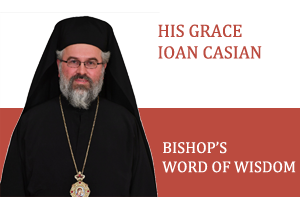
From May 28–29, 2026, the Interfaith Committee of Canadian Military Chaplaincy Representatives (ICCMC) held its meeting in Borden, Ontario. The event was attended by His Grace Bishop Ioan Casian, representing the Canadian Conference of Orthodox Bishops (CCOB), alongside representatives from various Christian denominations, religious, and spiritual traditions. The meeting focused on the strategic pillars for transforming the military chaplaincy institution in alignment with contemporary social realities.
- Modernization Plan for the Military Chaplaincy Institution and Chaplain Evaluation
The Office of the Chaplain General presented a modernization plan focused on developing leadership skills, streamlining administrative processes, and broadening the recruitment base. However, participants emphasized that this process must not reduce the chaplain's role to technical indicators or CV achievements. They called for a balanced evaluation capable of capturing the profound dimension of vocation, character building (humility, courage, authenticity), and pastoral resilience.
- Institutional Relationship with the Department of National Defence
ICCMC members highlighted the need for closer and more transparent collaboration with military structures and the Office of the Chaplain General. Among the primary requests were: establishing clear protocols for consultation and regular communication, organizing regular meetings between executive leaderships, renewing and strengthening the Memorandum of Understanding with the Department of National Defence.
- Strategic Openings: Diversity, Indigenous Communities, and Professional Standards
1. Pluralism and Indigenous Representation: Acknowledging the ICCMC's historical roots in the Christian tradition, participants highlighted the necessity of adapting to a multi-faith pluri-spiritual model. It was decided to resume dialogue with Indigenous communities to ensure their authentic representation while maintaining organizational efficiency.
2. Recruitment and Training: The new selection standards aim to reduce cultural barriers and define an equitable framework of competencies (education, practical experience, and relational skills)
3. Psycho-Spiritual Care Training: In dialogue with the Canadian Association for Spiritual Care (CASC), the distinction between traditional theological training and modern psycho-spiritual care was analyzed, paving the way for cooperation based on clear professional standards and academic credentials.
Conclusions and Perspectives
The meeting concluded with the election of the new leadership team (President, Vice-President, and Secretary) and the establishment of the upcoming schedule.
The Borden meeting reflects the scope of the transformations taking place within the military chaplaincy institution in the Canadian context.
The conclusions were accompanied by a spiritual reflection from the Gospel of Luke (Chapter 12), inviting participants to trust and to orient themselves toward fundamental spiritual values.