6th Sunday after Pentecost
Healing the paralytic man in Capernaum
August 1, 2021
The lent - a period of change in the personal and relational quality of our time
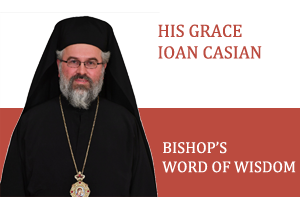
On Sunday, August 1, His Grace Bishop Ioan Casian was among the faithful of the Resurrection of the Lord and St. Michael and Gabriel Parish in Hamilton.
In his sermon at the end of the Divine Liturgy, the hierarch said:
“Today is the first day of Dormition of the Mother of God’s Lent. We have four longer periods of fasting during the ecclesiastical year before the important feast days: Great Lent, Nativity of the Lord Lent, Dormition of the Mother of God Fast and the Fast of the Holy Apostles. Through their length, they emphasize the importance and role of the feast days they precede. The first two periods of fasting precede two feasts of the Savior Jesus Christ - the Resurrection and the Nativity -, the third - the Dormition of the Mother of God and the fourth - the feast of the Holy Apostles Peter and Paul.
They can be related to the four characteristics of the Church mentioned in the Creed - one, holy, catholic and apostolic. The first three characteristics are associated with the Savior Jesus Christ: the unity of the Persons of the Holy Trinity is a model and requirement for us humans; the holiness is given to us by God through His grace and the Church, that is us humans, participate in it; catholicity or universality is on the one hand the universality of God's work for our salvation but also the all-encompassing mission of the Church to proclaim to all the salvation accomplished in Christ; apostolicity sums up in itself all the other characteristics, because it presupposes the confession of the truth about Jesus Christ and about His work in the world by word and deed as the apostles as His disciples did, a confession without which there is no true Church.”
The hierarch then talked about what it means to fast and its connection to the personal dimension of human life:
“Fasting is a change in the quality of our personal and relational time. Fasting means a change not only in the foods we eat but also a different ordering of our personal time. The fasting period is a time when we try to give more time to prayer and personal introspection to get closer to God. But fasting also means an intensification of the charity or almsgiving we do. We can do it helping materially. But if we do not have too many means, we can do it by giving of our personal time to others who are more needy or who are in more precarious conditions than us. Through this generosity with our time, we manifest our love for those in need, alone or elderly who do not have many material or relational possibilities. Through this relational generosity we resemble the Savior Christ who gave of His personal time, even His life, for our salvation. He has made us partakers of eternity right here on earth, the thing we continue in the Church.”
HG Bishop Ioan Casian then spoke about how the evangelical text of the healing of the paralytic in Capernaum reveals the divine authority of the Savior Christ, and His heavenly generosity:
“Today's evangelical text that speaks of healing the paralytic in Capernaum is an example of God's generosity and a model of generosity that we must show ourselves.
The Savior was in the house talking to the crowds who wanted to hear Him. His powerful word awakened consciences, raised the dead, healed the sick. All who had heard of Him wanted to receive blessing and help. His word and deeds became more and more known. All that had happened with the Savior was beginning to bring those who met Him to the realization that the Man before them was a Special One who looked more and more like the prophets of old. But progressively they understood even more: He, that is Christ, is a unique person. He is the Messiah, the Son of God (according to the confessions of St. Peter and St. Philip), the One promised before, chosen and sent by God for the salvation of men.
The healing episode in Capernaum reveals how the quality of time can change. The four who brought the paralytic man to Christ could very easily ignore his situation like the Priest and the Levite in the parable of the Savior. But they chose the path of the merciful Samaritan taking the responsibility of bringing the sick to Christ. The love of the four is noticed by Christ. For their faith, for their effort, Christ heals the sick. By acknowledging their faith, Christ implicitly recognizes the faith of the sick person. Christ recognizes the generosity, the love, the charity of the four for the paralytic man.
The gesture the four made is proof of their faith. Faith is proved by deeds. By faith we are saved, says St. Paul, but its existence is proven by deeds.
‘Son, be of good cheer; your sins are forgiven you’ says Christ to the paralytic. Forgiveness is a second element that must be noted in this miracle performed by Christ. The Jews understand very well what these words mean. Who can forgive sins but God alone? Forgiveness of sins is an attribute of God, not of men. That is why they conclude that the Man in front of them blasphemes. We can forgive people's actions against us but not sin in its deeper sense. The Sacrament of Confession is the reflection of this. The believer comes to confess to the spiritual father, but to the One to whom he speaks is God. God is the One who performs the mystery of the remission of sins. By the absolution given by the spiritual father, God forgives and undoes sin.
The words of Christ the Savior and the assumption of authority to forgive sins reveal His divine quality or identity. We see this authority clearly expressed in the ecphoneses of church services that proclaim the equality of Christ as the Son of God with the Father and the Holy Spirit. Christ's choice between the words ‘Son, your sins are forgiven’ and ‘Arise, take up your bed and go to your house’ is perhaps made in order to reveal more clearly His divine authority.
Fasting is a time of physical and spiritual asceticism. It is time to deepen our reflection on our relationship with God, on our lives, and on the testimony, we are called to give to the world. It is the time of our inner renewal, of the renewal of the quality of our Christian life, of pushing for the fulfillment of our witnessing vocation.”
In conclusion, the hierarch presented the first issue of the diocesan magazine Cuvântul/The Word of the Romanian Orthodox Diocese of Canada.