Saint Demetrius the New Parish of Montreal
16 Years Since Its Establishment
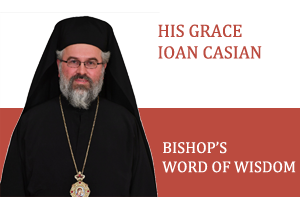
On the Sunday of the Holy Forefathers according to the flesh of the Lord, the community of Saint Demetrius the New Parish in Montreal, Province of Quebec, experienced a moment of profound spiritual joy. On the occasion of the 16th anniversary of the parish’s founding, His Grace Bishop Ioan Casian visited the faithful and celebrated the Divine Liturgy together with the parish priest, Fr. Ioan Ceaușu. The liturgical atmosphere was enriched by the prayerful and heartfelt responses offered by the parish choir, Vox Anima.
At the beginning of his homily delivered at the conclusion of the Divine Liturgy, the hierarch spoke about the liturgical period in which we find ourselves:
“The Katavasias, the liturgical texts, and the carols all carry the same preparatory, proclaiming, and missionary spirit; they all announce what will take place at the Feast of the Nativity of the Lord: the honoring of the gift that God bestows upon us. The greatest gift humanity has ever received is the Son of God, the second Person of the Holy Trinity, God the Word, Who became incarnate of the Virgin Mary for us and for our salvation.”
He then explained to those present why this 28th Sunday after Pentecost is also called the Sunday of the Holy Forefathers according to the flesh of the Lord:
“This liturgical typika shows us the importance of the righteous and inspired people of the Old Testament, chosen by God and called to fulfill a special mission: to open the way, to be guides and leaders of the chosen people toward the necessary preparation for the encounter with the Son of God. (…) The Holy Forefathers are set before us as examples of faith and perseverance. Although they faced many trials, they remained on the path because they trusted in God and saw His work in their lives, for the benefit of the entire people.”
Referring to the Gospel passage read during the Divine Liturgy, the hierarch stated:
“Today’s Gospel, through its very name and meaning, clearly shows us that if we wish to receive something from God, this is possible only in a spiritual state of purity of heart and through a righteous life. For no matter how much God desires to give us something, if our mind and heart are contorted, filled with malice or passions, we will not be able to receive His Word or His calling. (…) This is what the entire biblical tradition shows us, both Old and New Testament, as well as the entire ascetic and spiritual tradition of the Church: God is always with us. Most often, however, we do not perceive this presence because our mind and heart are not ready to see it and receive it. They remain blind. And this state is caused by the presence of passions in our lives.
Saint Paul the Apostle, in the Epistle to the Colossians that we heard today, begins with a powerful exhortation: ‘Put to death therefore what is earthly in you, on account of which the wrath of God comes.’ What does this word mean? Remove from your life the passions, weaknesses, and malice, all those things that disfigure us inwardly, because it is because of them that we suffer, not because of a righteous life.”
The Apostle continues a few verses later, saying: “You have put off the old man with his deeds and have put on the new man, who is being renewed in knowledge according to the image of his Creator.” Baptism is the foundation of this new life in the Church, and putting on the new man through Baptism is a potentiality; for it to become a reality in the form of virtues and a holy life, it requires the freedom and cooperation of our will.
Today’s Gospel calls us to be attentive to our hearts, so that they may not be darkened by passions. Otherwise, we will pass by God’s calling without hearing it. Therefore, this period of fasting is one of spiritual effort, in order to set aside what burdens the soul, so that the light of God may become more present in our lives.”
Concluding his address on this festive day, the hiearch said: “The gift of God, received personally, is never only for oneself. It is for the benefit of all, just as each member of the body works for the good of the entire body. That is why it is essential to understand our vocation and to follow God’s calling with faithfulness. Through Baptism we receive the forgiveness of sins, through Chrismation we receive the power to grow in virtues, and through the Holy Eucharist we are nourished with divine life and light. These three Mysteries of the beginning of Christian life change our entire perspective on life and help us become ever more like Christ, Who is the perfect Image of God.”
Following this, His Grace Bishop Ioan Casian presented two diplomas on behalf of the AROLA organization: Mother of the Year 2025 to Presbytera Mihaela Ceaușu, and a Diploma of Excellence with Scholarship to the young Gabriela Ecatherina Bajenaru.
The day continued with an exceptional Christmas carol concert performed by the parish’s two choirs: the Vox Anima Choir and the children and youth choir Sperantza (Hope).
The events concluded with a festive meal prepared by Presbytera Mihaela Ceaușu together with the parish Ladies’ Committee, a meal shared by all those in attendance.
(contribution by Nun Ana Bulgariu)