PASTORAL LETTER
OF THE HOLY SYNOD OF THE ROMANIAN ORTHODOX CHURCH
FOR THE FIRST SUNDAY
OF THE NATIVITY FAST OF THE YEAR 2025
REGARDING THE SIGNIFICANCE OF THE “CENTENNIAL YEAR OF THE ROMANIAN PATRIARCHATE” AND THE “COMMEMORATIVE YEAR OF THE SPIRITUAL FATHERS AND ROMANIAN ORTHODOX CONFESSORS OF THE 20TH CENTURY” IN THE ROMANIAN PATRIARCHATE
TO THE VENERABLE MONASTIC RANK, THE REVEREND CLERGY,
AND THE BELOVED FAITHFUL OF THE ROMANIAN PATRIARCHATE,
GRACE, PEACE AND JOY
FROM GOD THE FATHER, THE SON AND THE HOLY SPIRIT,
AND FROM US PATERNAL BLESSINGS!
Very Reverend Fathers,
Beloved brothers and sisters in the Lord,
Preserving the tradition established in 2008 regarding the homage and commemorative years, the Holy Synod of the Romanian Orthodox Church has proclaimed the year 2025, in the Romanian Patriarchate, as the Centennial Year of the Romanian Patriarchate and the Commemorative Year of the Romanian Orthodox Spiritual Fathers and Confessors of the 20th Century.
Throughout its 100 years of institutional activity and organization, the Romanian Patriarchate has proclaimed the Gospel and has guided the faithful, through the work of the Holy Spirit, toward Christ, the Bridegroom of the Church. At the same time, it has served as a factor of national unity, social stability, and cultural flourishing, while the spiritual fathers and Romanian Orthodox confessors of the 20th century were bearers and defenders of the Orthodox faith during the hostile times of the atheistic communist regime.
Beloved Christians,
Both the recognition of the autocephaly of the Romanian Orthodox Church in 1885 and its elevation to the rank of Patriarchate on February 4, 1925, represent two historic events of paramount importance for the ecclesial life of the Romanian people, for they greatly influenced the dynamic institutional and administrative development of the Romanian Orthodox Church, being the natural expression of the spiritual and national unity achieved through the Great Union of December 1, 1918.
The canonization of Romanian saints, the establishment of new dioceses, the organization of the Romanian Orthodox diaspora, and the significant contribution of the Romanian Orthodox Church to inter-Orthodox, inter-Christian and interreligious relations would not have been possible without these providential moments in its history and becoming.
Founded in the historical context of Greater Romania, the Romanian Patriarchate became the symbol of the spiritual unity of all Romanian Orthodox believers, reunited within the same national borders after centuries of administrative and ecclesiastical separation. The Great Union brought about important changes also in the life of our Church, making necessary the principle of unified ecclesiastical organization throughout the provinces of the Kingdom of Greater Romania.
On December 31, 1919, Bishop Miron Cristea of Caransebeș - who participated in the historic act of December 1, 1918, having celebrated the TeDeum service for the assembly of delegates who voted for the Union at Alba Iulia and having been part of the Transylvanian delegation that presented the Act of Union to King Ferdinand on December 14, 1918, in Bucharest - was elected Metropolitan Primate.
In this context, several ecclesiastical, political, and cultural personalities supported the idea of establishing a Patriarchate as an act of prestige appropriate for an autocephalous Church in an enlarged Romania, which after the Bolshevik Revolution (November 6–7, 1917), “was the largest Orthodox state in Europe,” as noted by Professor Alexandru Lapedatu, Minister of Cults, and “the only Orthodox people with a simple Metropolitan Primate at the head of an autonomous Church,” as observed by the scholar Nicolae Iorga.
On February 4, 1925, at the proposal of Metropolitan Pimen Georgescu of Moldavia, the Holy Synod of the Romanian Orthodox Church decided to establish the Romanian Patriarchate; the proposal was unanimously approved. In the same meeting, Bishop Vartolomeu Stănescu of Râmnic-the New Severin read the Act of Establishment of the Romanian Patriarchate, and the decision was communicated to the government for legislation. After its adoption by the legislative bodies (February 12 and 17, 1925), the law was promulgated by King Ferdinand I on February 23, 1925, and published in the Official Gazette on February 25, 1925.
Thus, after the Great Union, the diversity of ecclesiastical organization in Bessarabia, Bukovina, and Transylvania made evident the need for unification under a single ecclesiastical authority based in Bucharest. The Ecumenical Patriarchate, represented by Patriarch Basil III (1925–1929), considered “timely and justified [...] the elevation of the sister Church of Romania to patriarchal dignity.” The Tomos of the Ecumenical Patriarch issued on July 30, 1925, canonically confirmed the patriarchal dignity of the Romanian Orthodox Church, and the enthronement of the first Patriarch, Miron Cristea, on November 1, 1925, marked the beginning of a new era in Romanian Orthodoxy.
Throughout its 100 years of existence, the Romanian Patriarchate has affirmed itself as a fundamental institution for preserving the national and spiritual identity of the Romanian people. It has endured very difficult historical periods - royal dictatorship, the Antonescu regime, and especially the atheistic communist regime - uniting suffering with hope and surviving with vigor, to flourish after 1989 in a period of great spiritual and missionary renewal.
The Patriarchs who shepherded the Romanian Orthodox Church during this century (1925–2025) were wise and notable hierarchs, each contributing in his own way to the continuity and development of the Church’s life.
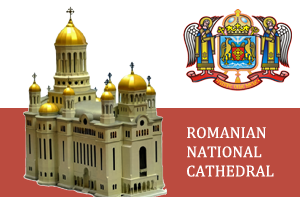
The desire of the Romanian Orthodox faithful for a new Patriarchal Cathedral, as thanksgiving to God for the creation of Greater Romania, was fulfilled through the construction of the National Cathedral. Thus, in the Centennial Year of Greater Romania (2018), on November 25, the Altar of the National Cathedral - dedicated to the Ascension of the Lord (Heroes’ Day) and Saint Andrew the First-Called, Protector of Romania - was consecrated, and on October 26, 2025, on the feast of Saint Demetrius the Myrrh-Streamer, the exterior and iconography of the National Cathedral were consecrated - a gift of the faithful Romanian people, born from faith in God and reverence for Romanian heroes.
Through all its elements, the National Cathedral can be seen today as an open book of Orthodox theology, written in stone, color, and light, calling to prayer and holy communion.
Through its consecration, it becomes a foretaste of the eternal communion with the Holy Trinity in the Kingdom of Heaven - an essential truth strongly emphasized in the service of the consecration of a church, when the troparion is sung: “This house the Father has built, this house the Son has strengthened, this house the Holy Spirit has renewed, enlightened and sanctified, and has sanctified our souls.”
Thus, the Church has been consecrated by the grace of the Most Holy Trinity in order to be for people an ark of salvation, a cross-shaped space of communion between the faithful and Christ, Who is crucified, risen, and ascended in glory, and, at the same time, the house of the Holy Trinity.
With the help of God, the generosity of the Government of Romania, and the contributions of clergy and faithful from within and outside Romania, the Romanian Orthodox Church now has in Bucharest a representative cathedral for the faith and piety of the majority of the Romanian people. It is called the National Cathedral because it is located in the Capital of Romania and hosts ceremonies of national symbolic value, being dedicated to all Romanian Heroes of all times.
The construction and consecration of the National Cathedral represent the fulfillment of an ideal entrusted to His Beatitude Patriarch Daniel - together with the Holy Synod, clergy, and faithful - by our worthy predecessors. Its realization received concrete form especially through the cooperation of all the hierarchs of the Holy Synod, who supported this project both by adopting the necessary synodal decisions and by continuing the national church collection in the dioceses.
On this occasion, we thank all donors and benefactors for the support shown in fulfilling this Romanian ideal in the radiant Centennial Year of the Romanian Patriarchate.
Beloved faithful,
At the celebration of the Centennial of the Romanian Patriarchate (1925–2025), it is fitting to honor in a special way the great shepherds of souls, confessing priests, martyrs, and great spiritual fathers who shone through their praiseworthy deeds during these 100 years - holy fruits of the Gospel of our Lord Jesus Christ on Romanian soil.
Thus, on February 4, 2025, the Holy Synod of the Romanian Orthodox Church proclaimed the canonization of 16 Romanian saints who confessed their faith in Christ during the difficult period of the communist regime in Romania. These saints represent the most precious fruit our Church has offered in this century, for through them the mysterious work of the grace of the Holy Spirit is shown concretely in the Romanian Orthodox Church.
They were canonized because their lives showed the signs of holiness: the Orthodox confession of faith, a holy life of repentance and prayer, humble and merciful love toward their neighbor, sacrificial witness to the faith, the working of miracles, and the piety of the people toward them.
The Church honors them especially because they resisted persecution with courage and dignity and confessed the truth of Christ even under torture and death, offering a living example of full Christian living.
Among the newly canonized saints adorning our Church calendar are martyrs who confessed the faith in Christ at the price of their lives. We mention Saint Priest-Martyr Constantin Sârbu, martyred because he refused to betray the Sacrament of Confession; Saint Priest-Martyr Liviu Galaction of Cluj, arrested for his catechetical work defending religious education in schools, who died in terrible suffering in Aiud prison; Saint Venerable Martyr Gherasim of Tismana, a great hesychast who confessed Christ and was martyred in Târgu Ocna prison; Saint Venerable Martyr Visarion of Lainici, who died confessing Christ after severe beatings at Lainici Monastery; Saint Priest-Martyr Ilarion Felea, parish priest and theology professor, who passed to the Lord after great sufferings in Aiud; Saint Priest-Martyr Alexandru of Bessarabia, who at the age of 80 was deported, stripped, beaten, starved, humiliated, and gave his soul to God in the Church of the Most Holy Mother of God in Kazan, in Soviet Russia.
We also remember the group of confessing priests in communist prisons who sanctified their lives through patience, love, and humility - forgiving those who beat, tortured, and mocked them, and thus passing peacefully to the heavenly dwellings.
Among these God-pleasing servants we mention Saint Venerable Confessor Sofian of Antim, a hesychast and iconographer, who suffered for his faith in the prisons of Bucharest, Jilava, Aiud, Galați, and Balta Brăilei. After his release he became a beloved spiritual father in the Capital, called by Father Cleopa Ilie “the Apostle of Bucharest”; Saint Priest-Confessor Dumitru Stăniloae, the greatest Orthodox theologian of the 20th century, who survived imprisonment at Jilava and Aiud and was admired as the translator and interpreter of the Romanian Philokalia and other patristic texts; Saint Venerable Confessor Arsenie of Prislop, who endured four imprisonments and, after release, was forced to live among lay people while secretly maintaining monastic discipline. After his repose, he performed many miracles; Saint Priest-Confessor Ilie Lăcătușu, who suffered in labor camps and prisons, a great man of prayer whose relics were found incorrupt and fragrant, working many miracles; Saint Venerable Confessor Iraclie of Bessarabia, one of the greatest Romanian missionaries in the interwar period in the land between the Prut and the Nistru, who confessed Christ for eight years in Soviet labor camps. After his repose, his relics were revealed as myrrh-streaming.
Also among this year’s saints are the venerable spiritual fathers recognized by the faithful as intercessors, guides, and wise shepherds of souls on the path of salvation. Among these great hesychasts and spiritual fathers are Saint Venerable Paisie of Sihăstria, who lived a life of harsh asceticism, humility, and love, and after his repose performed miracles; Saint Venerable Cleopa of Sihăstria, one of the most beloved Romanian spiritual fathers of the 20th century, a great preacher and apologist, a wise guide to clergy and laity, endowed with the gift of miracles; Saint Venerable Dometie the Merciful of Râmeț, a humble spiritual father known for his utter detachment from possessions and generosity, called by the people the “Apostle of the Moți”; Saint Venerable Serafim the Patient of Sâmbăta de Sus, a guide of many souls who received from God the gifts of foresight and miracles; Saint Venerable Calistrat of Timișeni and Vasiova, a humble missionary and spiritual father in Banat, who preserved monastic discipline and received from God the gift of healing and exorcism.
Beloved brothers and sisters in the Lord,
In the face of today’s many material and spiritual problems, the celebration of the Centennial Year of the Romanian Patriarchate calls us to a profound reflection on our mission and responsibility to preserve and transmit the light of the Orthodox faith and national unity in the spirit of our forefathers.
The Centennial Year is, therefore, a moment of holy joy and gratitude for all Romanian Orthodoxy. Looking back, we see not only a rich history but also a luminous spiritual heritage left by our predecessors - patriarchs, hierarchs, priests, monastics, and lay faithful - who defended and transmitted the Orthodox faith throughout time.
Ecclesial unity and the dignity of the Romanian Orthodox Church as a Patriarchate call us to deep spiritual communion in faith, prayer, and service, contributing to the strengthening and promotion of ecclesiastical and national unity, following the example of our predecessors who saw the Romanian Patriarchate as a symbol of the spiritual unity of the Romanian people.
With the help of the Merciful God, we now enter the Nativity Fast, known as the Christmas Fast. This period is above all a preparation for the sanctification of our souls and bodies through Confession and Communion, and also a time for mutual help and almsgiving.
Christian deeds of mercy - seen as fruits of right faith - are the concrete expression of humble love toward God and people.
In the present context, marked by economic crisis and insecurity, we must continue to multiply prayer for the end of wars and for strengthening those who suffer because of them. Today, when loneliness and depression, poverty and uncertainty increase around us, let us pray to the Lord Jesus Christ to strengthen our Christian work of helping the sick, the elderly, the orphans, the poor, and those in mourning or distress.
Therefore, we address the clergy and lay faithful of our Holy Church with the pastoral exhortation that, as every year, collections of food, clothing, and money be organized in parishes, monasteries, deaneries, and diocesan centers. These will be distributed to those in suffering and need, to disadvantaged families or those with many children, to the elderly and to people living alone, especially in rural areas.
Confident that you will again show Christian generosity and respond with love to our paternal call to this holy work of charity and assistance, we thank you for your constant generosity and remind you of the words of the Lord Jesus Christ: “Blessed are the merciful, for they shall obtain mercy.” (Matthew 5:7)
We pray to the All-Merciful God to bless all Romanians everywhere, granting them health and salvation, protecting them from all evil, and strengthening them in every good work, to the joy of our Church and of the Romanian people everywhere.
With much joy and esteem, we embrace you paternally and impart to you the apostolic blessing:
“The grace of our Lord Jesus Christ, and the love of God the Father, and the communion of the Holy Spirit be with you all!” (2 Corinthians 13:13)
The text is signed by His Beatitude Patriarch Daniel together with all the members of the Holy Synod of the Romanian Orthodox Church.