PASTORAL LETTER
AT THE FEAST OF THE LORD’S RESURRECTION, 2024
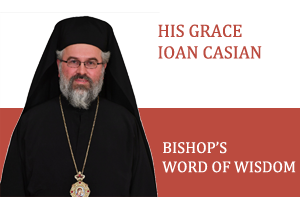
† IOAN CASIAN
By the mercy of God
Bishop of the Romanian Orthodox Diocese of Canada,
to our Beloved Clergy and Orthodox Christians,
peace and joy from Christ, the Risen Lord,
and from us, hierarchical blessing!
“In the beginning was the Word, and the
Word was with God, and the Word was God.
He was in the beginning with God. All things were
made through Him, and without Him nothing was
made that was made.”
(John 1, 1-3)
Most Reverend Fathers,
Beloved brothers and sisters,
Christ is risen!
"Today is the right time for all of us to shout what the blessed David said: Who shall utter the mighty acts of the Lord? Who shall make all His praises to be heard?'[1] - says St. John Chrysostom. Because here, the desired and saving celebration has come, the day of the Resurrection of our Lord Jesus Christ, the foundation of peace, the cause of reconciliation, the cessation of wars, the trampling of death, the defeat of the devil."[2]
The resurrection of our Lord Jesus Christ from the dead celebrated by us on Easter night is a unique and unrepeatable event because it is accomplished by God Himself through His Son. It means the victory over sin and the slaying of death. It means recreating man and our world after their first image. It is a perfect event with abyssal effects, immutable and unchangeable because it is the result of the work of will, power and grace of God.
The resurrection of the Lord is the foundation of our renewal. It is the new hope that man places at the bottom of his whole renewed life. It is the seed that rekindles in him the hope of eternal life. Without this event, man's failure to return to the sinless paradisiac life and in full communion with God, through his own limited powers or without God seen in the Old Testament and later times experience, has remained and will remain a permanent component of his earthly life.
St. Nicholas Velimirovici speaking about the Resurrection of Christ as a victory says: "The victory of Christ only is like a sun that spreads only brightness on everyone. Only the victory of Christ fills all souls with joy. It is the only one without malice. (...) it is a mysterious victory ... that is revealed to everyone, both the living and the dead. (...) A victory that heals and saves forever. Gentle victory that delivers man from all evil and makes him righteous and immortal."[3] This is why the Resurrection of Christ is so unique and special. It permeates everything through the power of Christ's grace and light. It shines over and through everything. It fills everything with the power of the wonderful work of our Lord Jesus Christ. It is unique and abyssal because it encompasses the world of the living and the deceased. Resurrection is not a secular and horizontal event limited by the materiality of our earthly world, but it is a universal event crossing all dimensions of the material and spiritual creation, seen and unseen, ontological and existential.
The resurrection of Christ is a healing victory. It is a victory that becomes a medicine for man and the world sick of sin and overcome and limited by death.
Why this need for human healing? Where does this disease of him come from?
Disease originates in man's falling away from God's commandment. The Holy Scripture says: "And the Lord God commanded the man, saying, ‘Of every tree of the garden you may freely eat; but of the tree of the knowledge of good and evil you shall not eat, for in the day that you eat of it you shall surely die.'"[4] At the urging of the devil, God's commandment was disobeyed and the consequences followed: "So when the woman saw that the tree was good for food, that it was pleasant to the eyes, and a tree desirable to make one wise, she took of its fruit and ate. She also gave to her husband with her, and he ate. Then the eyes of both of them were opened, and they knew that they were naked (...)."[5] Scripture shows us that disobedience to the word of God which was bringing the knowledge of man himself and of the world, was the primary cause of outbreaks of human sickness.
The Word of God which was at the origin of all creation was disobeyed. He was the foundation of all and the Creator of all. All things were made through Him, and He was also the connection of man and the world to God. The Word was also the tool by which God created man in His image and likeness, made him male and female, gave man life and knowledge of the world, made known to him his mission and responsibility but also their limits.[6] The Word was everything; and this very word was broken. This very word which was the tool by which man and the world received existence, and by which the former began to know, was trampled, and disobeyed. So, the Word as the Son of God and the second Person of the Holy Trinity, but also as a means of revelation, knowledge, understanding and connection between man and God was disregarded. Due to this attitude of man, through the temptation of the devil, in the relationship between man and his Creator was introduced distance, disobedience and distrust towards the Word of God, a false alternative and an erroneous path, an illusion of a truer knower than the Architect of this world Himself and a god in our image and likeness, earthly and human, passionate, selfish, looking like a rival of man.[7]
The consequence of what happened brought the need for healing from the disease of unbelief, disobedience, and distrust in God's word. It also showed the need to destroy death as the ultimate effect of the sin of disobedience.
How could this healing be done? What was its beginning?
The work of healing the man from sin and death was only possible through the work of God: "Finally, God saw that, even after so much care,[8] people still need His great and unspeakable love for people - says St. John Chrysostom. (...) therefore, having compassion on our nation, He set to be born of a Virgin and to take the form of a servant (Philippians 2, 7), Doctor of bodies and souls, the Only Begotten Son, raising Him so to speak, from the fatherly bosom; He set Him to spend time with us and to suffer all the weaknesses of our nature, so that He could raise our nature from earth to heaven, which was lying down somewhere because of sins."[9] The beginning of our healing was a work that had to be started also by God because of the weakness of our nature. The Son of God is born of the Virgin Mary, becomes one of us and our brother, takes on His shoulders the weight of our sin and suffering, suffers for us and raises our nature from sin and death to the eternal life which its calling set by God from the beginning.
The basis of our ability to renew ourselves was the work of divinity performed through the Son and the Word of God and then through the continuation of this work in the Church by the Holy Spirit.
What are the two means by which healing occurs?
God works healing through two imported means - Holy Scripture and the Church. In his introduction on the Book of Psalms, St. Basil the Great shows us the way in which Scripture is useful to us on the path of healing: "All Scripture is inspired by God and useful - he says. It was written by the Holy Spirit so that we can find in it, just like in a spiritual hospital, to which everyone can come, the medicine suitable for each one's illness. For it is written: 'the medicine is the one which will make the great sufferings cease.'"[10] Scripture is the word of God that is addressed to us. For man to be able to restore the authentic connection with God and to learn what is necessary for the path of salvation, he needs the Holy Scripture to become his guide to the One it speaks of. Scripture is the place where man finds the spiritual medicine, the right word for the sin that he has. Death was defeated by Christ through His death and resurrection. It is the Scripture that presents the saving work, the plan of God's providence, His overwhelming care, for us humans. The learning we acquire, the examples we see, the wisdom we receive from it, are our medicine and remedy that treats our diseases and infirmities, enlightens our minds and gives us the assurance of healing.
The second means of healing is the Church: "Yes, the Church school is a wonderful place of healing - says St. John Chrysostom; not only a place to heal bodies, but also souls. It is a spiritual place of healing; it heals not only the wounds of the body but also the sins of the soul."[11] The Church is the space where we experience the presence of God. The Church is the place where we hear, learn and begin to understand again the word of God. The Church is the place where the Holy Liturgy and the Holy Mysteries are performed. The Church is the place where soul and body’s diseases are treated and healed. The Church is the place where man relearns the history of the world and of himself, where he reappropriates the word of God in a condition of purity and with unquestioning faith.
The Church is the place of God's presence and the icon of the Paradise. On Easter night we experience mysteriously God's victory against the enemy the devil: "Today the Lord freed humanity from the tyranny of the devil and returned it to its former nobility - says St. John Chrysostom. When I see that my leaven has conquered death, I no longer fear war, I no longer fear battle. I no longer look at my weakness but look for the unspeakable power of Him who must fight with me. Will He who conquered the tyranny of death and took away all its strength, will He not fight for with those of another origin, whose image He wanted to take, because of His great love of people, and He wanted to fight with the devil?"[12] The Church is the temple or the place where the fear born of sin and alienation from the word of God are eclipsed by the joy of feeling the presence of the Son of God and the Holy Spirit. We feel in the Church the feeling and stature of our first nobility returning. We see and feel the slavery of the evil weakening and disappearing.
What is man's contribution to this healing? In what way does he participate in this spiritual journey?
God through incarnation, death, and resurrection, through the gift of Holy Scripture inspired by the Holy Spirit and the founding of the Church fulfills all that is necessary so that man can be healed, renewed, and saved. But the road to man’s healing also requires his contribution - the freedom to participate or choose it. Man synergistically walks the path to God: "The God of the universe has endowed our nature with free will and shows us all His goodness - says St. John Chrysostom; knowing our secrets and the thoughts of the depths of our souls, He urges us, advises us, and suppress our evil tendencies but does not constrain us; He gives us suitable remedies, but leaves our will to do everything.”[13]
This is how man needs to manifest his free will to participate in his healing from sin and death. If in the beginning man chose by free will the disobedience to the word of God, the sin and ultimately the death, now the same free will of man is needed to choose the healing from sickness, sin and death. Nothing can be done without man’s free will.
It all started with the word and the Word of God. Life, the world, and man, all were the fruit of the acting of the Word of God. That is why man, through the entire work of God within the Church, must regain the same simplicity, assurance, innocence, and naturalness of faith in the way God worked through His Word. Without this reacquisition of immutable and unchangeable faith, man will continue to limp and stumble along the path of spiritual growth from the image to the likeness of God.
We experience in this blessed Easter night the joy of renewal. We learn again that the Word was all in the beginning, and that by Him all things were made. The night of His resurrection restores the deep connection between God's Word and man. On Easter night, divine light transfigures everything and transforms us into people of light. Based on the trust in the word of God we rebuild the faith within us and shatter the doubt of sin and the fear of death.
Beloved brothers and sisters in Christ,
The Romanian Orthodox Church dedicated the year 2024 to the pastoral care of the sick people and to the Holy and Wonderworking Unmercenary Saints. Let us appropriate this specific pastoral care which means increased attention to our neighbor, to his or her suffering, needs and losses, because this means an embodiment of the work of the Son of God in the life of each one of us. It means building the concrete Church made up of all of us, each one becoming a brick laid at the foundation of the new life, image of the heavenly life without sin and death. May each of the wonderworkers and unmercenary saints become for us the examples of a life renewed in the Holy Spirit that will allow us to glimpse already from here on earth the possibility of a society lived in the spirit of heaven through the tangible work of God's mercy.
Let the day of the Resurrection of our Lord Jesus Christ be the basis of peace, the cause of reconciliation, the cessation of wars, the trampling of death, the defeat of the devil according to the exhortation of St. John Chrysostom.
On the Feast of the Resurrection of the Lord, let us rejoice and glorify God, let us praise the Resurrection of our Lord Jesus Christ on the third day from the grave, let us join the work of God's word and grace for our healing, renewal, and salvation.
At this festive moment I wish you all - clergy and faithful - blessed joys, grace, help and blessing from God and peace and harmony in souls, in the world and among peoples.
"Grace be with all those who love our Lord Jesus Christ in sincerity. Amen." (Ephesians 6, 24)
CHRIST IS RISEN!
Yours, in prayer to Christ the Lord,
† IOAN CASIAN
Saint-Hubert / Montreal 2024
__________________
[1] Psalm 105, 2
[2] Homily on Holy Easter in St. John Chrysostom, Sermons on Royal Feasts and Eulogies for Saints, translation by Rev. Fr. Dumitru Fecioru, Publishing House IBMBOR, Bucharest 2006, p. 148
[3] Resurrection Day in St. Nicholas Velimirovici, Sermons, translation by Anca Sârbulescu, 2nd edition, Publishing House: Ileana, Bucharest 2006, p. 215-216
[4] Genesis 2, 16-17
[5] Genesis 3, 6-7
[6] Genesis 1, 26-29: "Then God said, ‘Let Us make man in Our image, according to Our likeness; let them have dominion over the fish of the sea, over the birds of the air, and over the cattle, over all the earth and over every creeping thing that creeps on the earth.’ So, God created man in His own image; in the image of God He created him; male and female He created them. Then God blessed them, and God said to them, ‘Be fruitful and multiply; fill the earth and subdue it; have dominion over the fish of the sea, over the birds of the air, and over every living thing that moves on the earth.’ And God said, ‘See, I have given you every herb that yields seed which is on the face of all the earth, and every tree whose fruit yields seed; to you it shall be for food.’”
[7] Genesis 3, 4-5: "But of the fruit of the tree, which is in the midst of the garden, God has said, ‘You shall not eat it, nor shall you touch it, lest you die.’ Then the serpent said to the woman, ‘You will not surely die. For God knows that in the day you eat of it your eyes will be opened, and you will be like God, knowing good and evil.’”
[8] Through patriarchs, prophets, miracles, punishments, exhortations, captivities in the Old Testament
[9] The Homily XXVII on Book of Creation in St. John Chrysostom, On suffering and healing, Publishing House: The Word of Life of the Metropolia of Muntenia and Dobrogea, Bucharest 2016, p. 119
[10] St. Basil the Great, Introduction to Psalms in Book of Psalms, 8th edition, Publishing House: EIBMBOR, Bucharest 1994, p 5.
[11] Let us not expose the sins of our brothers and curse our enemies, 1, in St. John Chrysostom, On Suffering and Healing pp. 123-124
[12] Homily on Holy Easter, p. 151
[13] The Homily XIX on Book of Creation in St. John Chrysostom, On Suffering and Healing, p 89