Three skylights of the Orthodox Church
- St. Stephen the Great, St. Juvenal of Jerusalem and St. John Maximovich -
July 2
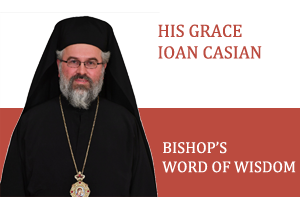
On Thursday, July 2, His Grace Bishop Ioan Casian celebrated the Divine Liturgy and a Tedeum of thanksgiving at St. George's Episcopal Cathedral in Saint-Hubert, Quebec, having beside Fr. Daniel Sandu, on the occasion of the fourteenth anniversary of his ordination as hierarch.
At the end of the religious service, the hierarch of Canada said:
Today the Church gives us three examples of saints, each of whom shows us various faces that the Christian life can put on in the concrete reality of our human history. At different times and in different epochs - St. Juvenal in the patristic period, St. Stephen the Great in the Middle Ages and St. John Maximovich in the modern era - are three faces of life in Christ that give us courage and give us examples and solutions to our search.
St. Juvenal lives in the turbulent period of the first half of fifth century and participates in the Third and Fourth Ecumenical Councils of Ephesus and Chalcedon; it is contemporary and is inspired by the great monastic movement represented by St. Theodosius the Great, St. Euthymius the Great, St. Simeon Stylites, St. Gerasim of the Jordan and others; acquires the title of patriarchy for the seat of Jerusalem along with the other seats: Rome, Alexandria, Antioch and Constantinople.
St. Stephen the Great is the most important king of Moldavia and the Romanian Lands through his Christian vision and his struggle for the preservation and defense of the Land of Moldova. St. Stephen understands that the permanence of a people is not preserved through the administrative and social organization of a nation. For him, permanence is ensured by the spiritual dimension that underlies the life of a nation and that crosses the temporal limits of the different epochs that he himself has known. The churches were the ones that coagulated and rebuilt the foundation of the Romanian people after so many wars on the spiritual basis of the faith in God expressed in the cultural and social forms of the tradition. The great Romanian historian Nicolae Iorga, speaking about St. Stephen the Great, reminds us that the churches founded or renewed after each battle had the role of being a place of prayer to clean the dust that had drunk people's blood in countless wars of defense. St. Stephen the Great understands that man is destined for eternity, but this eternity has its roots in the concrete time of history. He continues to rebuild his nation around God and around the memory of those who have sacrificed themselves so that others after them can have a free country of their own and a home where they can start a family and form a people and a culture to be proud of.
St. John Maximovich is the image of the holiness and universality of the Church. Born in Russia, he studied theology and was ordained a bishop during his stay in the Balkans (Serbia / Macedonia), then continued his pastoral work in Asia and Western Europe and finally in North America in San Francisco. He is the face of the universality of the Gospel message he has spread across three continents. He is a model for all those who, like our Romanian forefathers, who came here in North America more than 125 years before for a better life and brought with them the richness of Romanian spirituality and Christian culture and thus contributed to the strengthening and the spread of the Orthodox faith here.
At the end of the religious service HG Bishop Ioan Casian blessed those present.
____________________
His Grace Bishop Ioan Casian
July 2, 2006 - ordained vicar-bishop of the Romanian Orthodox Archdiocese of the Americas
May 7, 2017 - enthroned as Bishop of the Romanian Orthodox Diocese of Canada